



HMO Emergency Lighting Testing Dorset & Hampshire: Monthly Flick Tests and Professional Servicing

Emergency lighting is a vital part of fire safety in houses in multiple occupation (HMOs). If the normal electricity supply fails during a fire or another emergency, properly maintained emergency lighting helps occupants identify escape routes, navigate communal hallways and staircases, and leave the building safely.
For landlords and property managers, installing emergency lighting is only part of the responsibility. The system must also be inspected, tested and maintained so that faults can be identified and addressed before the lighting is needed in an emergency.
MRG Electricians provides emergency lighting testing and servicing for HMOs, rental properties and commercial premises across Dorset and Hampshire, including Bournemouth, Poole, Christchurch and surrounding areas.
Why Is Emergency Lighting Important in an HMO?
HMOs often accommodate several unrelated households, with occupants sharing facilities such as kitchens, hallways, landings and staircases. Residents may be unfamiliar with the building's layout, making clearly illuminated escape routes particularly important during an emergency.
If the normal lighting fails, a dark staircase or communal corridor can make evacuation more difficult. Emergency lighting is designed to provide illumination when the normal lighting supply is interrupted, helping occupants identify routes towards a place of safety.
Depending on the building's design and fire risk assessment, emergency lighting may be needed along escape routes, near changes in level, at stairways, near final exits and at other locations where additional illumination is necessary.
Regular testing helps establish whether the system operates as intended. A fitting that looks perfectly normal during everyday use may have a failed battery or another fault that only becomes apparent when its emergency function is tested.
What Is a Monthly Emergency Lighting Flick Test?
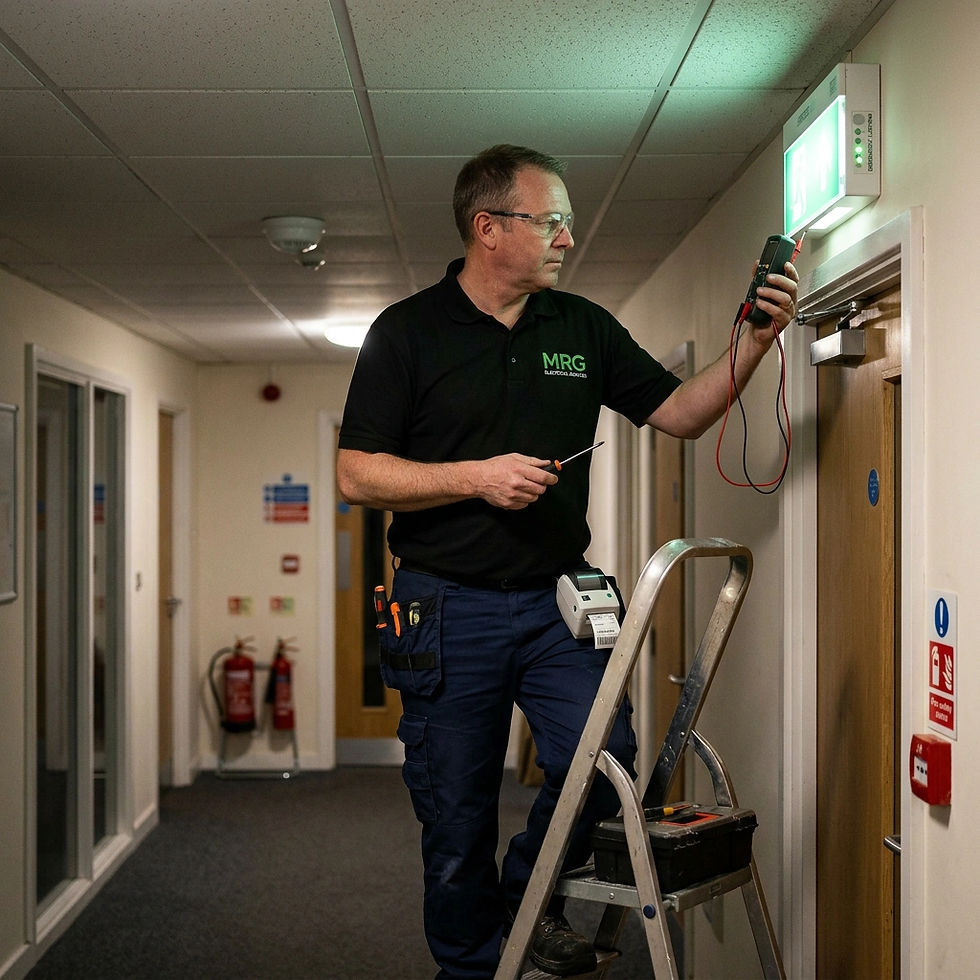
A monthly emergency lighting flick test is a short functional test designed to check that emergency lighting fittings operate when the normal lighting supply is interrupted.
The test is commonly carried out using an appropriate test switch or other suitable method for the installed system. The normal supply to the emergency lighting is temporarily interrupted, allowing the fittings to operate from their emergency power source.
During the test, the person carrying it out checks that the relevant lights illuminate and that there are no obvious signs of failure. Once the test is complete, the normal supply is restored and the fittings are checked to confirm that they return to their normal operating and charging condition.
What Does the Monthly Test Check?
Monthly functional testing can help identify:
Emergency lights that fail to illuminate.
Faulty lamps, LED modules or fittings.
Warning indicators suggesting battery or charging problems.
Visible damage to equipment.
Problems with the test arrangement or emergency operation.
Fittings that do not return to their normal condition after the test.
Any defects should be recorded and investigated, with repairs arranged as appropriate.
A monthly flick test is relatively short, but it plays an important role in identifying obvious problems between more comprehensive inspections.
Important: A monthly flick test does not prove that the batteries can power the lights for their full rated duration. That is why periodic full-duration testing is also important.
How Is an Annual Full-Duration Emergency Lighting Test Carried Out?
In addition to monthly functional checks, emergency lighting systems generally require periodic full-duration testing in accordance with the applicable standards, system manufacturer's instructions and the building's fire safety arrangements.
For relevant systems, the rated duration is commonly three hours, although the correct requirement must be confirmed for the installation.
During a full-duration test, the normal supply is interrupted and the emergency lighting is operated for the required period. The fittings are checked to establish whether they continue to operate appropriately throughout the test.
The inspection may identify batteries that no longer hold sufficient charge, fittings that fail before the end of the required period or other defects affecting performance.
After the test, the normal supply is restored and the system is allowed to recharge in accordance with the manufacturer's instructions.
Why Does Full-Duration Testing Matter?
A light illuminating for a few seconds during a monthly test does not necessarily mean it will remain operational throughout an emergency.
Full-duration testing helps identify weaknesses that a short functional check may not reveal. This is particularly important in HMOs where communal escape routes may need to remain illuminated for an extended period.
Because a full-duration test can temporarily reduce battery charge, it should be carefully planned. Landlords and property managers should ensure that suitable precautions are in place while the system is being tested and recharged.
What Happens During Professional Emergency Lighting Servicing?
Professional servicing goes beyond simply switching the lights on and off. The scope of work depends on the type of emergency lighting system, its condition and the maintenance requirements for the property.
Checks may include:
Emergency lighting fittings: Checking operation, condition and visible damage.
Illuminated exit signs: Confirming that applicable signs operate and remain legible.
Batteries and charging indicators: Checking for fault indications and signs of deterioration.
Test switches and controls: Confirming that the appropriate test arrangements operate correctly.
Emergency operation: Checking that fittings illuminate when the normal supply is interrupted.
Post-test operation: Confirming that normal power is restored and charging resumes.
Defect reporting: Recording failed fittings and other issues requiring investigation or repair.
Where problems are found, the relevant fitting or component may need repair or replacement. Any remedial work should be agreed with the property manager and completed by a competent person.
Why Landlords Must Keep Emergency Lighting Records Up to Date
Keeping accurate records is an important part of managing emergency lighting in an HMO. Records help landlords, managing agents and maintenance contractors understand when checks were completed and whether any defects remain outstanding.
A useful maintenance record should include the date of the test, the areas or fittings checked, the results, any faults identified and the action taken.
Records of periodic full-duration tests and remedial work should also be maintained as appropriate.
Up-to-date records can help demonstrate that maintenance is being managed, make recurring faults easier to identify and support the property's wider fire safety arrangements.
If a fitting fails a test, it is important not simply to record the issue and leave it unresolved. The fault should be investigated and suitable corrective action arranged.
What Are the Risks of Neglecting Emergency Lighting Maintenance?
Without regular testing, problems such as failed batteries, damaged fittings or faulty charging systems can remain unnoticed.
This can leave occupants without the intended illumination if the normal lighting supply fails. It can also lead to unexpected repair costs, incomplete maintenance records and potential difficulties demonstrating that appropriate fire safety arrangements are in place.
For landlords, the priority should be to ensure that the emergency lighting system is suitable for the property, maintained appropriately and repaired when defects are identified.
Monthly functional testing, periodic full-duration testing and professional servicing work together to provide a more reliable approach to maintenance.
Emergency Lighting Testing for HMOs Across Dorset and Hampshire
MRG Electricians supports landlords, HMO managers and businesses with electrical services across Dorset and Hampshire, including:
Bournemouth and Poole
Christchurch and Ferndown
Wimborne and surrounding Dorset areas
Southampton and surrounding Hampshire areas
Portsmouth and nearby locations
Whether you manage one shared house or multiple HMO properties, keeping emergency lighting testing and servicing up to date is an important part of responsible property management.
Contact MRG Electricians to discuss your property's emergency lighting system, arrange appropriate testing and address any maintenance issues that need attention.
Book Emergency Lighting Testing with MRG Electricians
Need emergency lighting testing or servicing for your HMO, office or commercial premises?
Call MRG Electricians on 07378 449449 to discuss your requirements across Dorset and Hampshire.
Website: https://www.mrg-electrician.co.uk/
Follow MRG Electricians:
Testing frequencies and procedures must be appropriate to the installed system, the applicable standards, manufacturer instructions and the building's fire risk assessment. A monthly functional test does not replace periodic full-duration testing or other required maintenance.


Comments